
The Mysterious Sanguinaccio
Arthur Avenue, the heart of Little Italy in the Bronx, usually bustling with shoppers and tourists was less so this week because of the beginning of Lent. The fish market was busy, but the butcher shops were relatively quiet as meat is off limits to Catholics on Ash Wednesday.

Italian food on Arthur Avenue is seasonal, and by seasonal I mean driven by the holidays. Yes, the basis of cooking in Italy is the reliance on fresh ingredients, harvested at their peak, but in Italian-American communities it means having zeppole and sfingi (cream puffs) for the feast of Saint Joseph, fish on Christmas Eve, and, for handful of the old-timers, a pudding called sanguinaccio (pronounced san-gwee-nacho) during Lent. This week, handwritten signs on paper and in chalk popped up around the Arthur Avenue bakeries. They will remain in place until Easter Sunday, and then disappear once again.
Sanguinaccio is not likely to turn up on a dessert menu next to the tiramisu in any Italian restaurant. Mario Batali has a recipe for it online that calls for cocoa powder, chocolate, cinnamon, and pine nuts. Delicious, right? He’s missing one crucial ingredient, though–freshly slaughtered pig’s blood. Yes, even the king of hoof and snout cuisine himself decided to not go all Carrie on us and chose milk to make it thick and creamy instead.
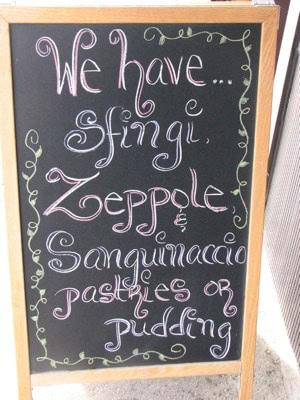
For Italians, there’s no mystery to get past, as the word sangue (blood) is front and center. Everyone I know who has grown up in Italy thinks sanguinaccio is a disgusting, unsanitary thing that only hillbillies from 100 years ago would eat. Indeed, the blood needs to be cooked within 24 hours of slaughtering the pig if it is to be safe. I wondered if the blood had some significance for the Easter season–perhaps the blood of Christ?
I asked a couple of the bakers on Arthur Avenue and each one of them stared me down wordlessly. One replied, “Don’t ask. Eat.” Fortunately, our friend Beatrice at Gustiamo knew the answer.
She explained that late January, February and early March are the months when pigs are slaughtered in the countryside. When a family or a farm kills the pig, it is a time of celebration and feasting. Friends and family are invited to a lunch where the pieces of the pork that cannot be conserved are cooked and enjoyed right away. Sanguinaccio is one of those dishes.

Last year, I described sanguinaccio to a friend, an experienced hunter who immediately wanted to try it. He purchased a frozen cup of it at Morrone Bakery and brought it to a dinner party to share with the other guests. He explains: “The sanguinaccio we had was very delicate, not at all what you’d expect. Lightly sweetened–much less sugar than anyone expected–and only slightly chocolatey.
“The blood didn’t seem to affect the flavor at all. Instead it altered the texture of what one expects from pudding. It was very dense; the blood added a weight to the dish. It was like an extra creamy pudding except in a completely non-dairy, non-whipped way. Very thick, very rich, hearty almost. It was a wonderful contrast to the flavor, which was just a hint of chocolate sweat. At the dinner party, everyone who tried it loved it. But most attendees couldn’t get past the blood factor and left it untouched. Their loss. It really was a treat.”
Sanguinaccio is not common, but if you look hard enough, is found in rural pockets all over Italy. It’s most often associated with Naples and Campania; therefore, it’s not surprising that Arthur Avenue, with so many descendants from the Italy’s south, still shares a love for sanguinaccio. It has morphed into a Lenten tradition but likely won’t be around much longer than the generation who never blinked an eye at the inclusion of pig’s blood.
Then again, sweetbreads are popular, blood sausages are trendy, and baccala, once the most peasanty of all foods, is $12.99 a lb. If you’re interested in trying it, just look for the handwritten signs. Personally, for now, I’m going to pass.
FTC Disclosure: As an Amazon Associate, I earn from qualifying purchases. Good Food Stories LLC receives a minuscule commission on all purchases made through Amazon links in our posts.


