
Why I Won’t Roast My Own Coffee Beans
Intrepid urban homesteaders have reported success using skillets, popcorn poppers, woks, and other repurposed equipment to roast raw coffee beans in the comfort of their own homes. While this is the type of adventuresome project that seems right up my alley (see also: Pinkberry, marshmallow fluff), after a trip to Small World Coffee headquarters, it’s one food I’ll never try to DIY.
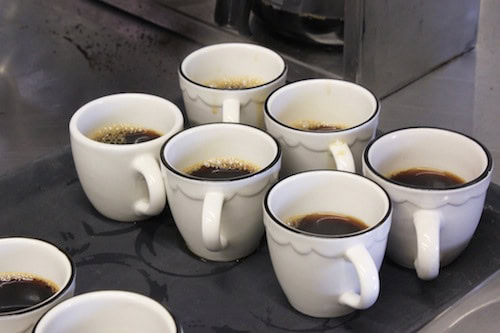
Small World Coffee is the little giant of coffee roasting in New Jersey, making its home in the Princeton area since 1993. During my visit, co-founders Jessica Durrie and Brant Cosaboom sampled new cold brew equipment and did a pour-over comparison tasting while partner Jon March worked the roaster. Brant and Jon are the only two people who do the actual coffee roasting and between the both of them, they’re able to roast up the company’s weekly quota for the two Princeton cafés as well as wholesale and retail in 15-20 hours spaced out over three days.

“It takes the fluctuation out of the process” to have the same sets of eyes and ears monitor the beans, Brant said, meaning that the house blend I drink today is going to taste exactly the same as the house blend I drink next month, no matter what variations the roasters need to make in-house to balance it out. As Jon explains on the SWC blog:
Since coffee crops often vary from year to year both in quality, and yield (quantity), beans from our favorite origins are not always available, or are simply not good enough in a given year. We work through this by tweaking our blend recipes when necessary, and sometimes we even have to swap in an entirely different bean (this isn’t possible in every case: certain beans have flavors so unique there is no substitute!)
The roaster itself is like a hybrid convection oven/laundry dryer. As the beans bounce around inside, the guys listen carefully for the two *pops* that signal key moments in the roasting process. These noises, known as first crack and second crack, indicate how much moisture is left in the coffee bean and what temperature the beans have reached internally.
If you stop the roast before the second crack, it’s less than full-bodied: “like Dunkin’ Donuts,” Brant said. If you leave the beans roasting too long after the second crack, the volatile oils within the bean–the oils that give coffee its incomparable aroma and flavor–can burn, leaving you with Starbucks’ Pike Place-style coffee. (Apologies to those of you who like it super-dark.) Being able to finesse that timing is what makes a good coffee roaster as opposed to someone who’s just scorching the beans.
Small World turns over its inventory of raw beans monthly, and works with brokers to make sure they’re getting the right flavor profile in their beans from various coffee growers around the world. For small roasters like Small World, the brokers ensure quality product is coming their way–SWC only uses Specialty Grade coffee, the highest grade available–when most of the world’s beans are spoken for at annual auctions.
Apart from the simple fact that, unlike Parmigiano Reggiano or Bomba rice, I’d be hard-pressed to get my hands on such quality ingredients in small quantities for my home, I’m glad Brant and Jon are doing the roasting for me. It’s not just a question of DIY logistics, it’s a matter of supporting a local business that’s been part of the Princeton community for almost 20 years. Yes, the beans come from beyond the Garden State, but I’m almost rubbing my eyes in disbelief that I can get incredible coffee beans essentially from my backyard.
And that’s why I won’t bother doing it myself. Now excuse me while I go brew my morning cup.

FTC Disclosure: As an Amazon Associate, I earn from qualifying purchases. Good Food Stories LLC receives a minuscule commission on all purchases made through Amazon links in our posts.

Casey Barber
Casey Barber is the owner and founder of Good Food Stories LLC and a visual storyteller whose work often focuses on the intersection of food and culture. She is the author of the cookbooks Pierogi Love: New Takes on an Old-World Comfort Food and Classic Snacks Made from Scratch: 70 Homemade Versions of Your Favorite Brand-Name Treats, a past Acadia National Park artist-in-residence, and a recovering vintage Pyrex collector. Her favorite color is obviously orange.


