
What You Need to Know About Cutting Boards
Soapbox moment! Every once in a while, I feel the obligation to drop some science like Galileo dropped the orange and dispel a few food misconceptions.
Though on the whole I consider myself a positive person, it took so much willpower not to verbally smack the woman who last week tried to sell me on a new cutting board by extolling the virtues of a “bacteria-repellent” polypropylene model, with the added complaint that wood is too hard on your knives and will dull them swiftly and significantly.
Sigh. So many untruths to take care of in that sentence.
Now, I have been guilty of bad, bad cutting board hygiene in the past, but knowledge is power and I am now well-armed against microbial killers in my kitchen. And you should be too.
Simply, it doesn’t matter whether you use a wood cutting board or a plastic cutting board–what matters is how well you clean it.
If you want to go easy on your knives, the best option is a wooden end-grain cutting board , which “heals” itself. End-grain means that the wood fibers are aligned vertically, so when your knife blade cuts into the board, it slips between the miniscule fibers rather than cutting across the grain. The fibers close up on themselves when the blade is removed to minimize deep scratches. If you already own a flat-grain board, by all means don’t throw it away–it’s still an excellent choice, but will show wear more quickly.

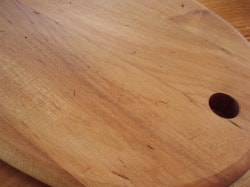
When you first acquire your wooden board, season it by coating it liberally with food-safe mineral oil (not vegetable oil or olive oil, no matter what certain Food Network personalities tell you), and which you can also find at your local drugstore. It’s a laxative, FYI, if you ever need it for… other purposes.
Periodically you’ll have to reapply the oil, and every decade or so, it can’t hurt to sand the board down with fine-grade sandpaper to get rid of any errant deep knife marks, but this is a board that will last as long as your stand mixer (provided neither of them are thicker polypropylene boards do have the durability advantage over the thin, flexible plastic cutting mats
 , although you won’t be able to bend them.

People love plastic cutting boards because they can be run through the dishwasher, which they believe sanitizes them. However, unless your dishwasher specifically has a “sanitize” function or if you know it reaches at least 190? F as part of the regular wash cycle (most max out at 140?), guess what? Your boards aren’t sanitized and that chicken bacteria is still floating around in the crevices. Not to scare you or anything.
And those grooves that build up from frequent knife use (cut bread on a plastic board with a serrated knife for just a few minutes, then run your hand across the surface and you’ll see what I mean) can become velcro pockets for bacteria. You’ll eventually have to replace the plastic boards when they become too deeply scarred.
For both wood and plastic, constant vigilance through regular sanitizing will keep you in the clear, and you don’t need a dishwasher to do it. 1/2 teaspoon of bleach diluted into 2 cups of water will disinfect your boards. If bleach is not your thing, you can also spray straight white vinegar onto the board–whichever solution you use, spray thoroughly and leave the solution on the board for at least 10 minutes before wiping off with a clean damp washcloth.
And the easiest common sense reminder to keep you from cross-contamination: Buy at least two cutting boards. Designate one of them solely for prepping raw meat. Don’t use it for anything else. Not cheese, not veggies, not bread, not chocolate. Just meat, disinfected after each use.
Next time, we’ll talk about that janky wet sponge on your countertop and the germs it’s harboring. And maybe later we’ll take a field trip to discuss my fear of hotel bedspreads.
FTC Disclosure: As an Amazon Associate, I earn from qualifying purchases. Good Food Stories LLC receives a minuscule commission on all purchases made through Amazon links in our posts.

Casey Barber
Casey Barber is the owner and founder of Good Food Stories LLC and a visual storyteller whose work often focuses on the intersection of food and culture. She is also the author of the cookbooks Pierogi Love: New Takes on an Old-World Comfort Food and Classic Snacks Made from Scratch: 70 Homemade Versions of Your Favorite Brand-Name Treats, and she couldn’t get anything done without the help of her executive assistant cats, Bixby and Lenny. Her favorite color is obviously orange.


